When changing prices are influencing the time-horizon decision, first use the inflation data guide to separate a monthly release from the longer trend and your own spending exposure.
Asset allocation is the division of a portfolio among broad classes such as stocks, bonds, and cash. It is the main way a household chooses how much market risk the plan will carry. The decision should begin with the obligation the money must meet, not with a forecast about which asset will perform best next year.
The same person can reasonably hold three different allocations at once: cash for an expense next year, a balanced portfolio for a goal in seven years, and a growth-oriented retirement portfolio for several decades. Combining those balances into one percentage can hide whether the near-term obligation is actually protected.
Define the horizon correctly
The time horizon is not simply the target year. Record four dates:
- Earliest plausible use
- Most likely use
- Latest acceptable use
- Expected duration of withdrawals
A one-time home purchase in 2032 differs from retirement beginning in 2032 and lasting decades. The retirement portfolio may need near-term spending reserves and long-term growth assets at the same time.
Also record whether the date can move. A discretionary purchase may wait after a market decline. Tuition, a tax bill, or a contracted closing may not.
Measure loss capacity
Loss capacity asks whether the financial plan can continue after a decline. Consider:
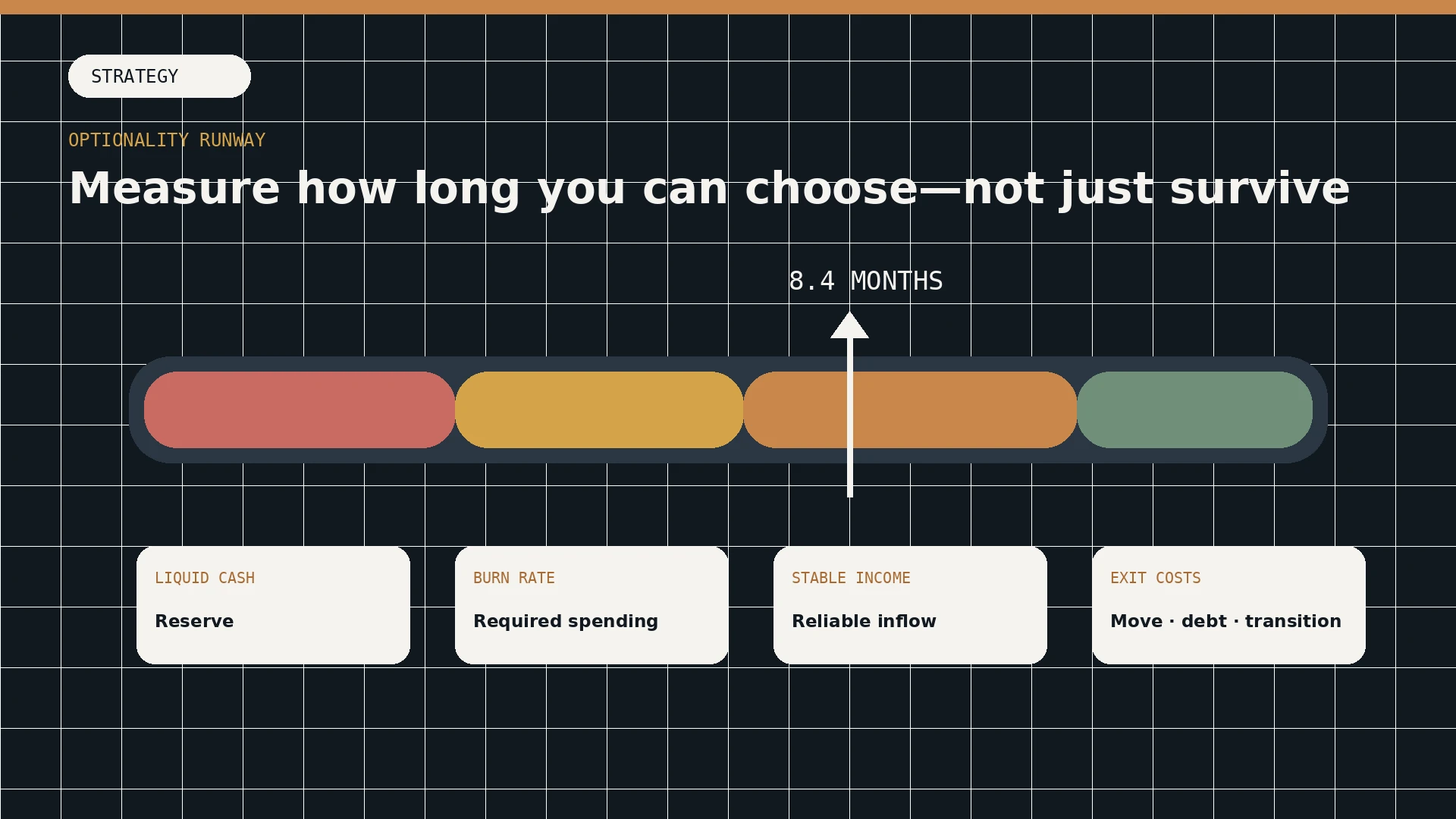
- Emergency reserves outside the portfolio
- Stability and diversity of income
- Debt and required payments
- Insurance coverage
- Flexibility of the goal amount or date
- Size of future contributions relative to the balance
- Whether withdrawals begin all at once or gradually
A portfolio can be emotionally uncomfortable but financially durable, or emotionally comfortable but financially fragile. The allocation must respect both, but capacity creates the hard limit.
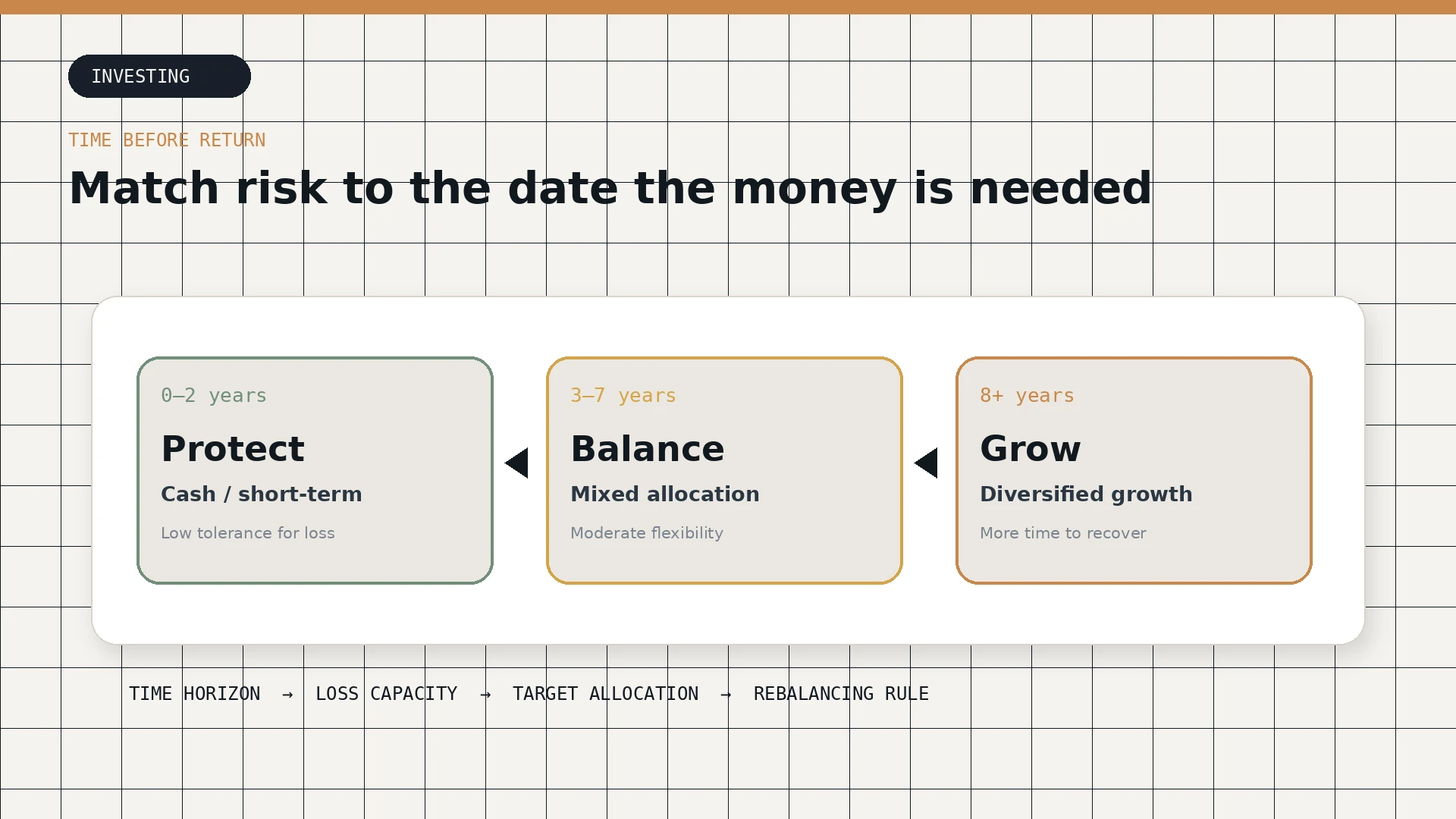
How soon could the money be required?
Emphasize liquidity and capital stability. A market recovery may not arrive before the obligation.
Use a balanced allocation based on flexibility, contribution rate, and the cost of delay.
A diversified growth allocation may have more time to recover, but only within the household’s loss capacity.
Separate the goals into buckets or explicitly reserve near-term withdrawals.
These ranges are planning prompts rather than universal recommendations. Interest rates, asset valuations, taxes, product costs, and personal circumstances matter. The key principle is that the risk should decline as the cost of a poorly timed loss rises.
Build three goal buckets
Protect
The protect bucket covers money with a near-term, nonnegotiable job. Common tools include insured deposits, Treasury bills, money-market instruments, and high-quality short-duration holdings appropriate to the account and jurisdiction. The priority is being able to meet the obligation, not maximizing expected return.
Check access dates, price volatility, credit risk, insurance limits, fees, and tax treatment. “Cash-like” is not the same as guaranteed.
Balance
The balance bucket serves goals that need growth but cannot fully absorb a large decline near the use date. It combines growth and stabilizing assets and should include a plan for reducing risk as the date approaches.
The allocation can use ranges rather than one exact number. New contributions may be directed to the underweight class. A fixed annual review or range-based rebalancing rule prevents constant reaction.
Grow
The grow bucket serves long-horizon money with flexible timing and adequate reserves elsewhere. Diversified stocks may play a larger role because the portfolio has more time to recover and continued contributions can buy through declines.
Long horizon does not eliminate risk. It does not justify concentration, excessive fees, leverage, or investments that cannot be understood. Growth should come from accepting compensated, diversified risk rather than from needing a particular prediction to be correct.
Use a glide path, not a cliff
A common error is staying aggressive until the goal is close and then moving everything at once. That creates a single market-timing decision. A glide path reduces risk gradually as the obligation approaches.
A simple rule might transfer one year of expected withdrawals into the protect bucket at each annual review. Another might reduce the stock target by a fixed range as the earliest use date moves closer. The exact rule should reflect taxes, account restrictions, and the goal.
Account for human capital and concentration
Employment income is part of the household risk picture. Someone whose income is highly sensitive to technology stocks, real estate, energy, or the local economy may not want the portfolio concentrated in the same exposure. Employer stock combines job risk and investment risk in one organization.
The goal is not to make every asset move differently every day. It is to avoid one event damaging income, portfolio, housing, and borrowing capacity at the same time.
One household, three allocation jobs
| Scenario | Best for | Upside | Main trade-off | Next step |
|---|---|---|---|---|
| Home purchase | Fixed down payment in two years | High confidence the cash will be available | Lower expected return | Protect the required amount and invest only the flexible surplus |
| Education goal | Known window in six years | Some growth with a planned de-risking path | Requires annual review as the date approaches | Set target ranges and a yearly transfer rule |
| Retirement growth | Contributions continue for 20 years | More time to recover from market declines | Greater interim volatility | Diversify, control costs, and rebalance by policy |
| Early retirement bridge | Withdrawals begin soon but continue for years | Separates near-term spending from long-term growth | More moving parts | Reserve the first withdrawals and invest later years separately |
Test the allocation against a bad sequence
Do not test only the average return. Ask what happens if the portfolio declines shortly before the goal, if inflation is higher than expected, or if contributions stop. The Investment & Savings Calculator can compare scenarios, but it cannot predict the path of returns.
A robust allocation should answer:
- Which dollars are available without selling growth assets?
- How long can the goal be delayed?
- What amount can be reduced?
- What contribution can increase?
- What rule triggers a review?
Turn the page into action
Set a goal-based allocation
- Record the earliest, likely, and latest use dates.
- State whether the amount and date are flexible.
- Calculate loss capacity using reserves, income, debt, and future contributions.
- Separate protect, balance, and grow buckets.
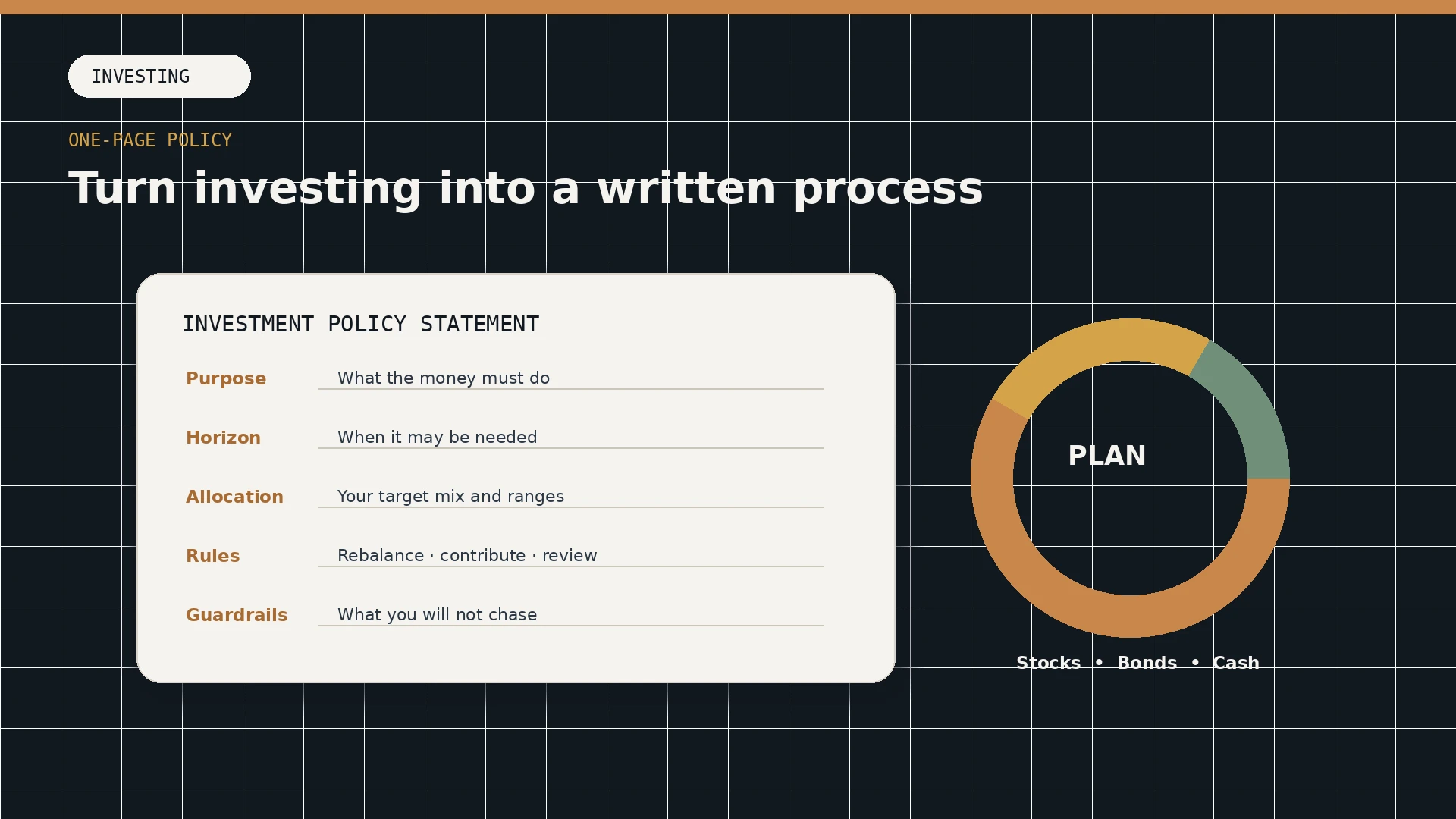
- Write target ranges and a glide-path or rebalancing rule.
- Test a decline near the goal before committing to the allocation.
Evidence
Sources
- Asset Allocation and Diversification
U.S. Securities and Exchange Commission — Investor.govAccessedAugust 18, 2026
- Beginner's Guide to Asset Allocation, Diversification, and Rebalancing
U.S. Securities and Exchange Commission — Investor.govAccessedAugust 18, 2026
Common questions
Frequently asked questions
Is age enough to determine asset allocation?
Age can be relevant to retirement planning, but each goal has its own horizon, withdrawal pattern, and flexibility. A young investor may still need a conservative allocation for a near-term home purchase, while an older investor may retain growth assets for money not needed for many years.
What happens as a goal gets closer?
The portfolio normally needs more liquidity and less dependence on a favorable market date. The transition should follow a written glide path or review rule rather than a sudden reaction to market news.
Can one account hold money for several horizons?
It can, but the allocation should still identify how near-term needs are protected. Separate accounts or clearly labeled buckets make it easier to avoid spending long-term growth assets during a decline.