
Budget Planner & Expense Tracker
Plan a monthly budget, track actual spending, manage recurring costs, and keep a local backup without creating an account.
FreeLocal browser data
View details Open App
Make decisions that survive uncertainty
Use financial theory, behavioral insight, risk analysis, and scenario planning to make choices that remain useful as conditions change.
Category map
Filters change the map without creating deep category directories or moving guide URLs.
On smaller screens, swipe horizontally to reach every category filter.
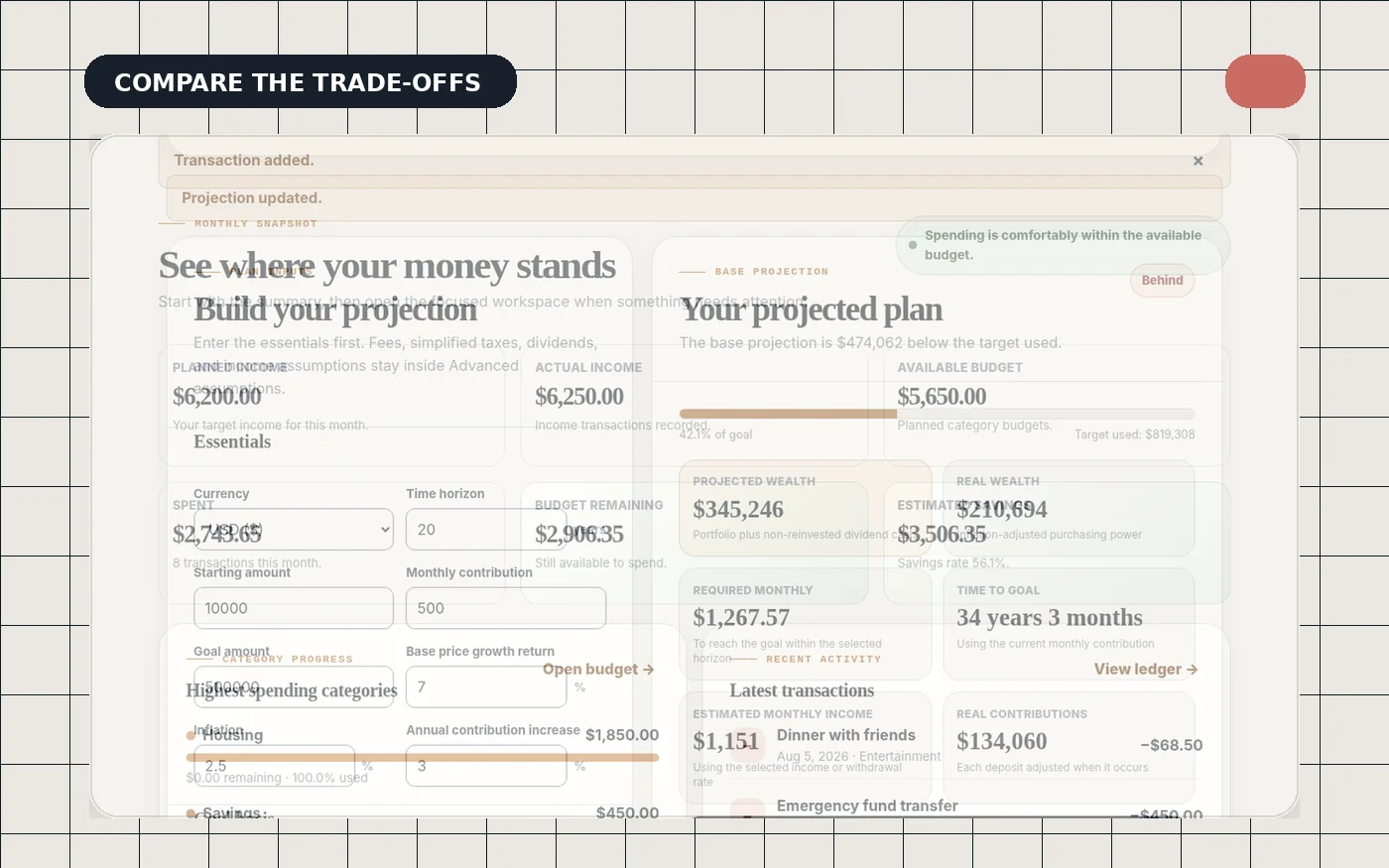
A repeatable sequence
Use the same six questions to slow down high-impact choices and expose trade-offs.
State the outcome without naming the preferred solution.
Identify the largest plausible loss.
Know what can be undone and at what cost.
Name the option being displaced.
Use ranges instead of false precision.
Match the decision to how long consequences last.
Put it into practice
Open the product page for privacy, assumptions, and limitations, or launch the browser tool directly.
Plan a monthly budget, track actual spending, manage recurring costs, and keep a local backup without creating an account.

Compare fixed, minimum-payment, and target-date plans, then see payoff time, interest, payment milestones, and the effect of extra payments.

Model payments, total interest, extra principal, variable rates, balloon structures, lender offers, and refinance break-even.
Guide
Every entry keeps its canonical hub URL while categories remain flexible filters.
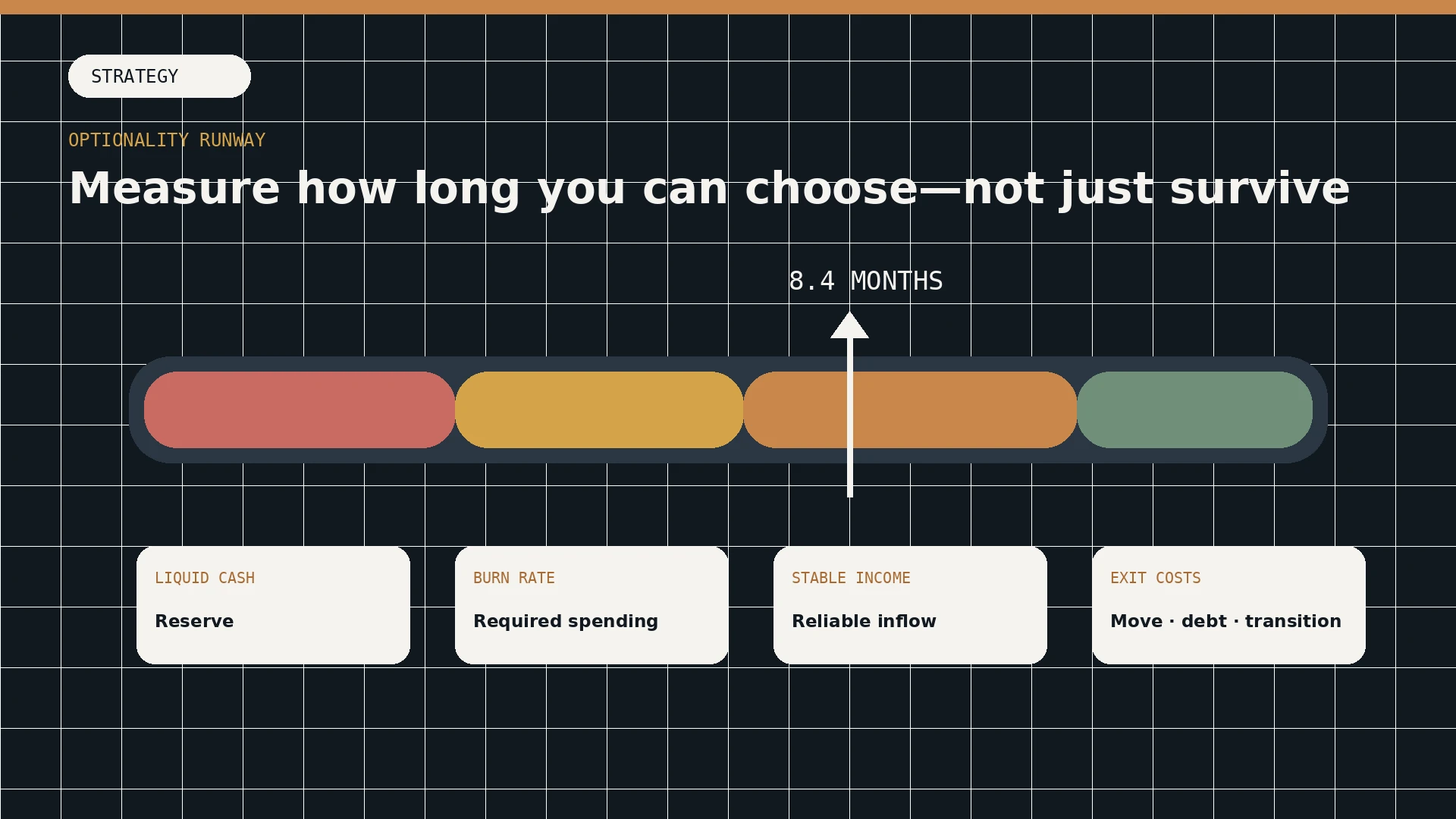 05 CONTROL Financial Optionality Runway Optionality runway extends the basic emergency-fund calculation by accounting for income reliability, concentration, and the cost of the decision being considered. Open
 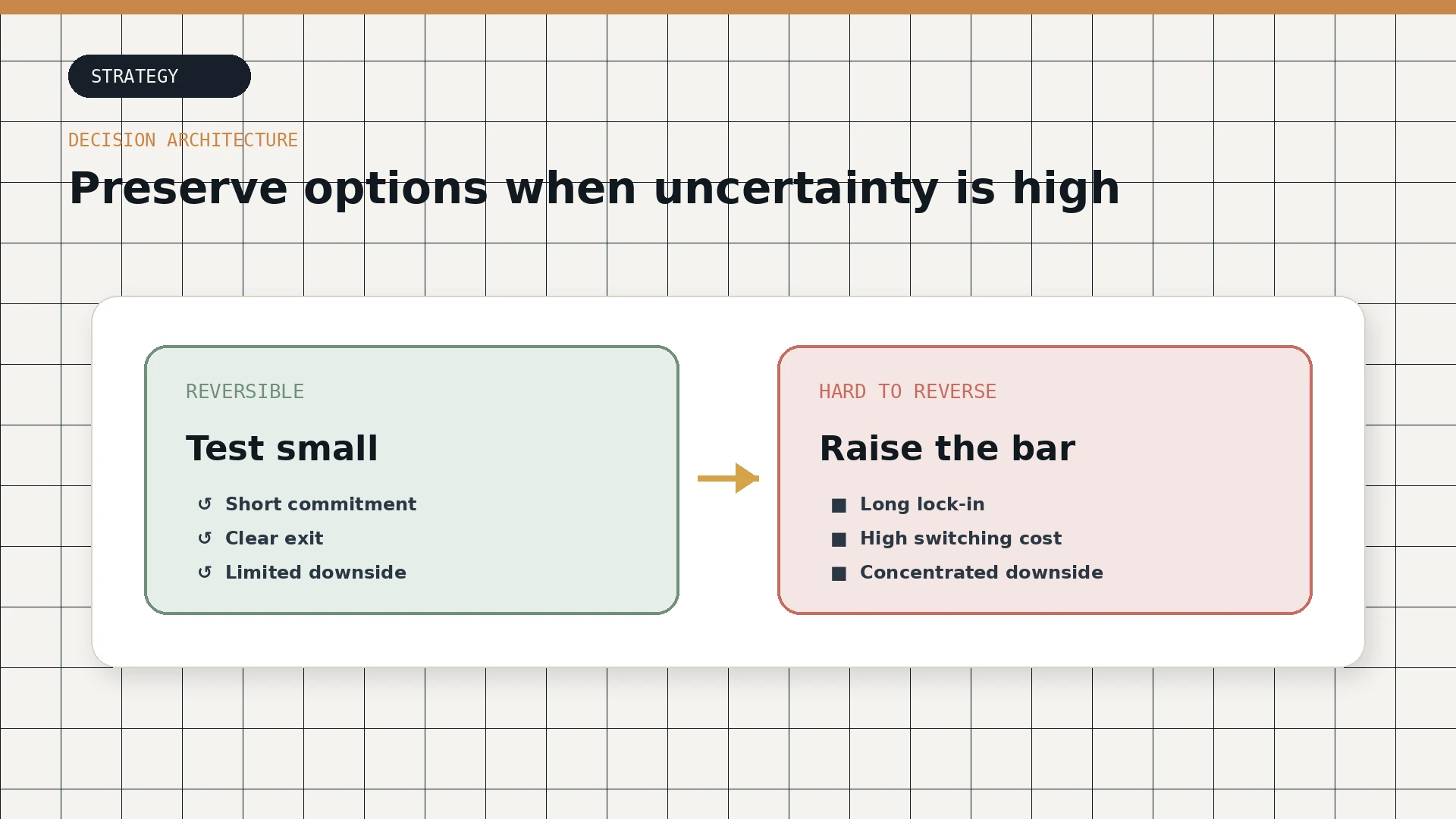 05 CONTROL Reversible vs. Irreversible Decisions Reversible decisions can be tested cheaply; hard-to-reverse decisions deserve more evidence, margin, and explicit exit planning. Open
 Turn the page into action