If a concentrated source has already failed and payments may slip, the credit report triage guide explains how to protect current status while separating factual errors from genuine balances.
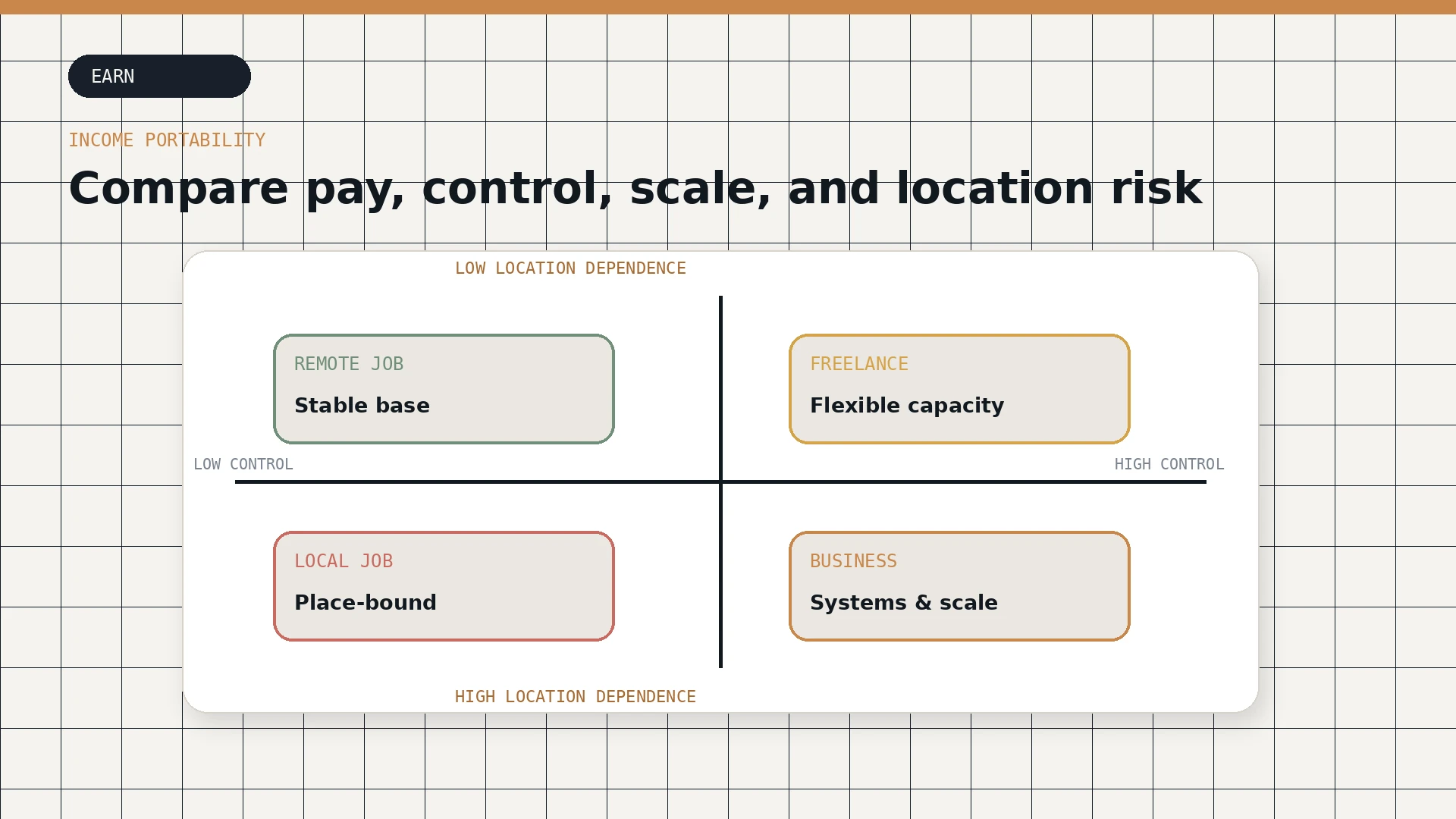
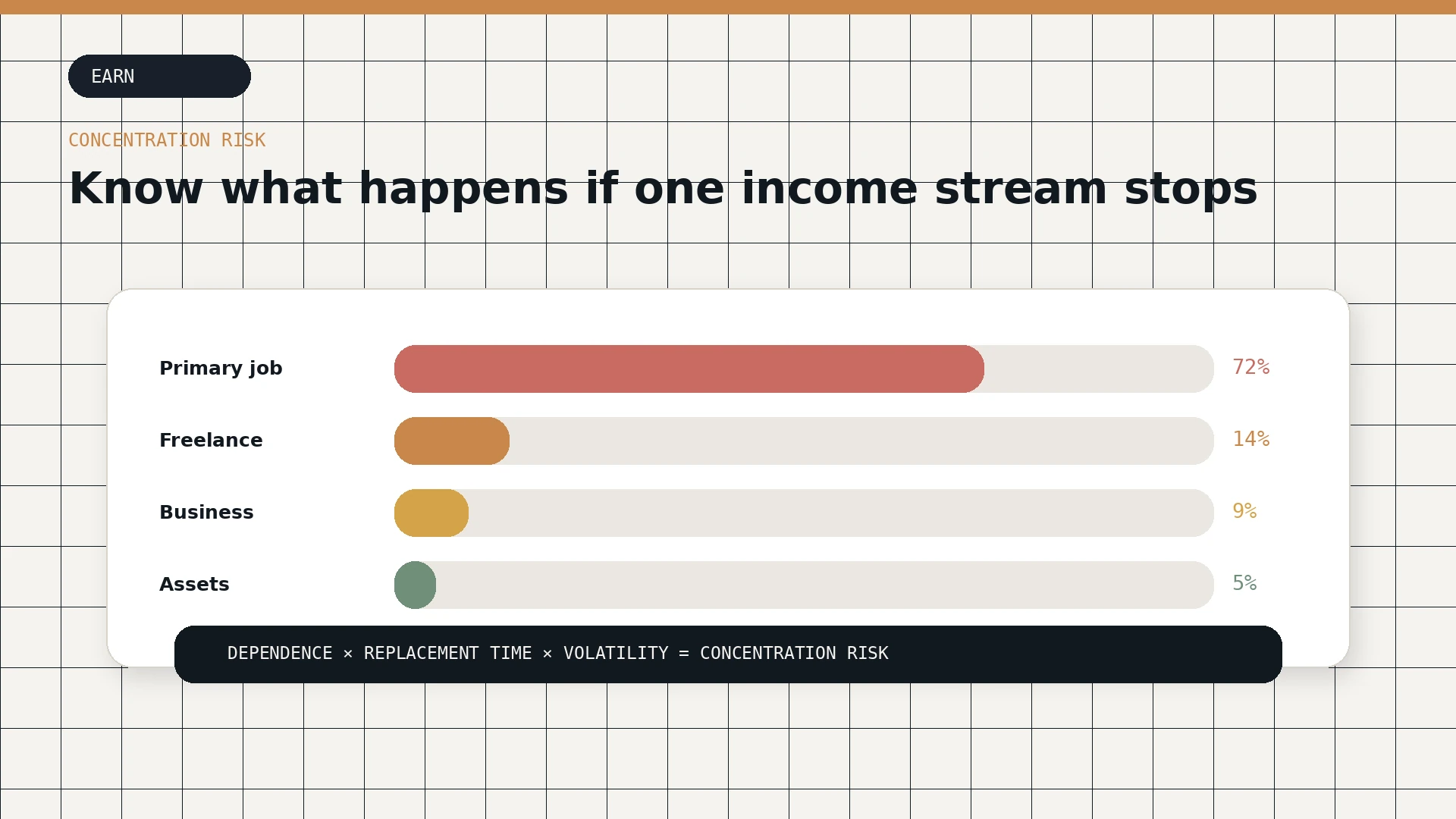
Income concentration risk is not simply “having one job.” It is the chance that one event removes too much household cash flow and takes too long to replace. The concentration may sit in an employer, client, product, platform, region, license, or payment channel.
A salaried role can be highly concentrated but stable and protected by benefits. Five small online products can look diversified while all depend on one advertising platform. The analysis must identify the true failure point.
Calculate the concentration shares
For the last 12 months, calculate:
- Largest employer share of household income
- Largest client share of freelance revenue
- Largest product share of business gross profit
- Largest platform share of customer acquisition or payment
- Largest country or currency share
- Largest asset share of investment income
Use after-tax or gross consistently. For business streams, revenue alone can mislead; use contribution margin or owner cash after direct costs when possible.
Add replacement time
A 70% concentration that can be replaced in two weeks is different from one requiring a year of licensing, hiring, or customer development. Estimate:
- Time to first replacement income
- Time to replace half the lost income
- Time to restore benefits and insurance
- Cost of the transition
- Whether the lost source damages reputation, equipment, location, or other streams
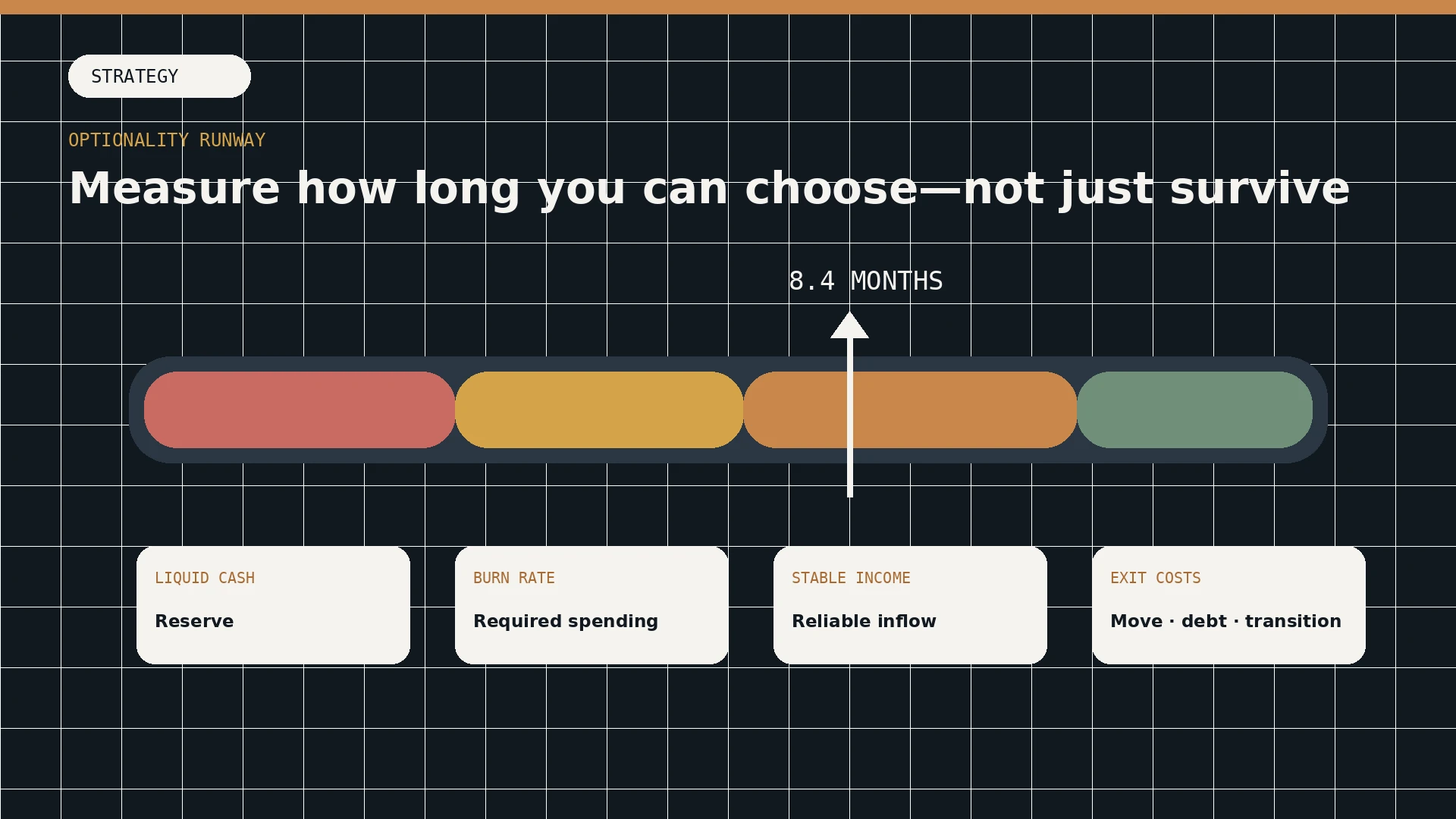
Runway should exceed the realistic replacement time plus a margin for error.
Add volatility and correlation
A small stream may contribute little annual income but become valuable when the main source weakens. Another may rise and fall with the same market, making it less useful as diversification.
Examples of correlated risk:
- Salary and employer stock
- Real-estate job and local rental property
- Freelance clients in one industry
- Several products sold through one marketplace
- Job and side work requiring the same license
- Multiple streams paid through one processor
What is the largest single failure point?
Build transferable skills, external relationships, and a verified backup role before leaving stability.
Set a concentration cap and use renewal capacity to add a second independent buyer.
Build direct customer access, backup payment, and portable records where permitted.
Test an adjacent offer with shared capabilities but a different demand driver.
Choose a diversification path that does not create chaos
Diversification has costs: attention, tools, taxes, bookkeeping, legal setup, marketing, and switching. Add one controlled stream at a time.
A useful sequence is:
- Protect the current reliable income.
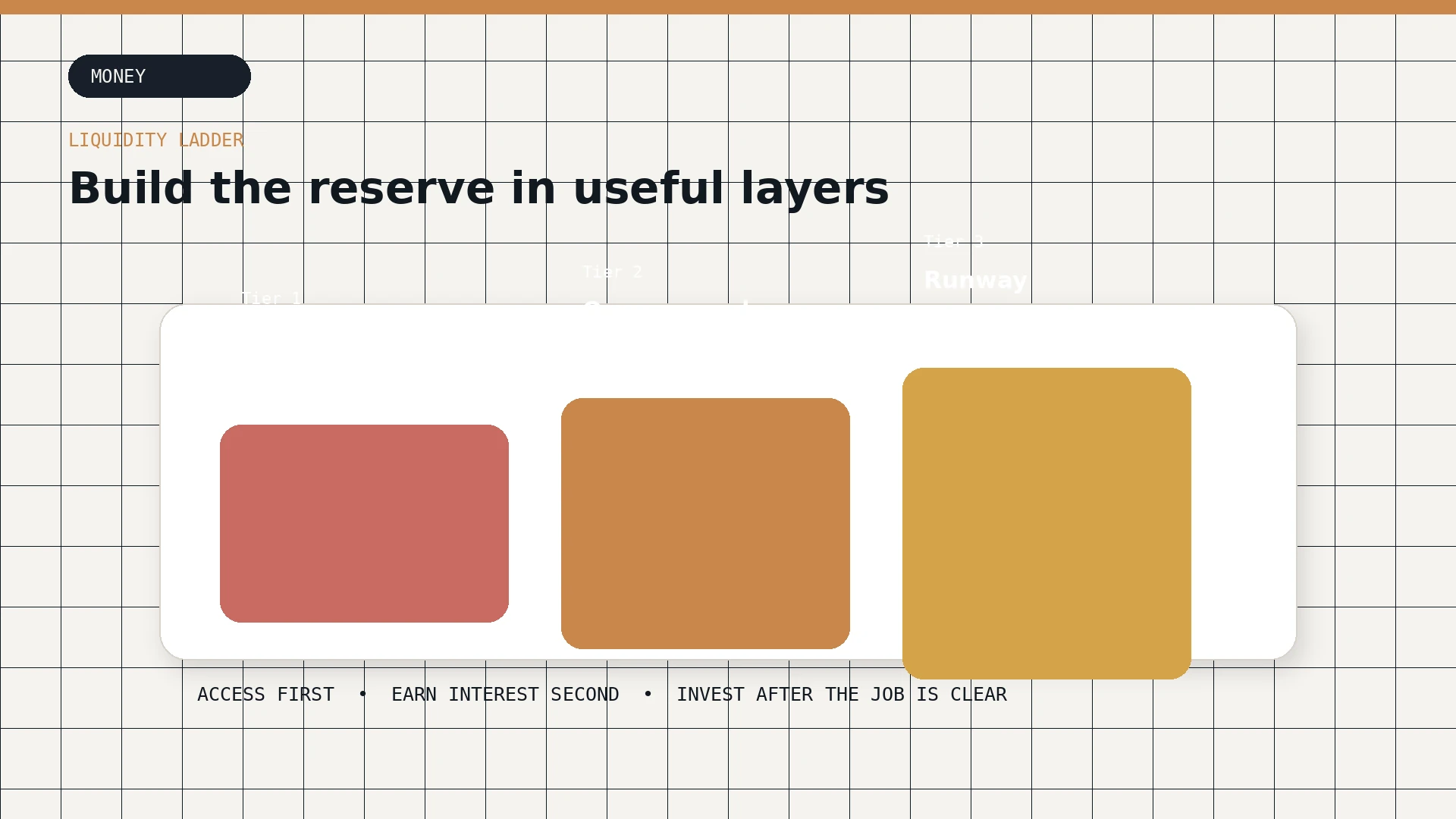
- Build a small emergency and tax reserve.
- Identify a capability that can serve a different buyer.
- Run a limited paid test.
- Measure demand, margin, repeatability, and time cost.
- Expand only after the test clears a threshold.
The goal is not maximum side-hustle activity. It is reducing dependence per hour and per dollar invested.
Build three types of diversification
Buyer diversification
Add employers, clients, or customers whose budgets are independent. A second client in the same company group may not provide much diversification.
Capability diversification
Develop skills that transfer across roles and industries. Documentation, sales, data analysis, teaching, project delivery, software, design, and operations can be packaged in different ways depending on the worker.
System diversification
Reduce dependence on one platform, payment method, supplier, or distribution channel. Maintain backups, exportable records, and direct relationships where legal and practical.
Choose the next diversification move
| Scenario | Best for | Upside | Main trade-off | Next step |
|---|---|---|---|---|
| Second client | Freelancer with one dominant buyer | Directly reduces client concentration | Adds sales and scheduling load | Set a target share before accepting more work from the first client |
| Transferable credential or portfolio | Employee with long replacement time | Improves outside options without leaving the job | Takes time before income appears | Build one externally verifiable capability |
| Adjacent product | Business dependent on one offer | Uses existing customers or operations | Can distract from the profitable core | Run a small paid demand test |
| Direct channel | Platform-dependent creator or seller | Reduces gatekeeper risk | Customer acquisition may cost more | Build permission-based direct contact and backup payments |
Manage taxes and benefits as concentration changes
A new self-employment stream can create estimated-tax, bookkeeping, insurance, and retirement responsibilities. Set aside taxes from the first payment rather than waiting for the stream to become “large enough.”
If employment benefits are a major part of compensation, calculate the cost of replacing health coverage, paid leave, retirement match, disability protection, and payroll-tax treatment before reducing hours or leaving.
Set a concentration policy
Write a rule that fits the household. Examples:
- No freelance client should exceed 40% after the next renewal cycle.
- Maintain six months of required spending before leaving the only salary.
- No platform should control both customer acquisition and payment without a backup.
- Employer stock cannot exceed a stated percentage of investable assets.
- A new business stream must reach a margin and repeat-customer threshold before fixed costs increase.
Review quarterly. Concentration can return as one client grows faster than the others.
Turn the page into action
Reduce income concentration deliberately
- Calculate the largest employer, client, product, platform, and market shares.
- Estimate replacement time, transition cost, and lost benefits for each major source.
- Identify correlated streams that could fail together.
- Choose one new buyer, capability, or channel with a different failure mode.
- Run a time- and budget-limited paid test.
- Write a concentration limit and review it each quarter.
Evidence
Sources
- Manage your finances
U.S. Small Business AdministrationAccessedAugust 18, 2026
- Estimated Tax for Individuals
Internal Revenue ServiceAccessedAugust 18, 2026
- Occupational Outlook Handbook
U.S. Bureau of Labor StatisticsAccessedAugust 18, 2026
- Your Money, Your Goals toolkit
Consumer Financial Protection BureauAccessedAugust 18, 2026
Common questions
Frequently asked questions
How many income streams should I have?
The useful number depends on independence, quality, and management cost. Two streams tied to the same employer or platform may not diversify much. One stable base plus one genuinely independent stream can be more valuable than many small correlated activities.
Should I start a side business while overloaded?
Only if the test is small and the expected information or risk reduction justifies the time. Protect health, primary income, and family obligations. A complex side business can increase fragility instead of reducing it.
What concentration percentage is safe?
There is no universal limit. The right threshold depends on replacement time, reserves, benefits, contract protection, and correlation with household expenses and other income.